

The Magic Kingdom’s New Algorithm: How Disney’s AI Bet Will Shape What We See Online
What does the Disney–OpenAI deal (potentially) mean for social media?

Some partnerships feel obvious from the beginning:
peanut butter + jelly
Netflix + true-crime documentaries
TikTok + being banned in the U.S.
Others arrive with the kind of surreal energy that makes you blink a few times, just to make sure you didn’t hallucinate the headline.
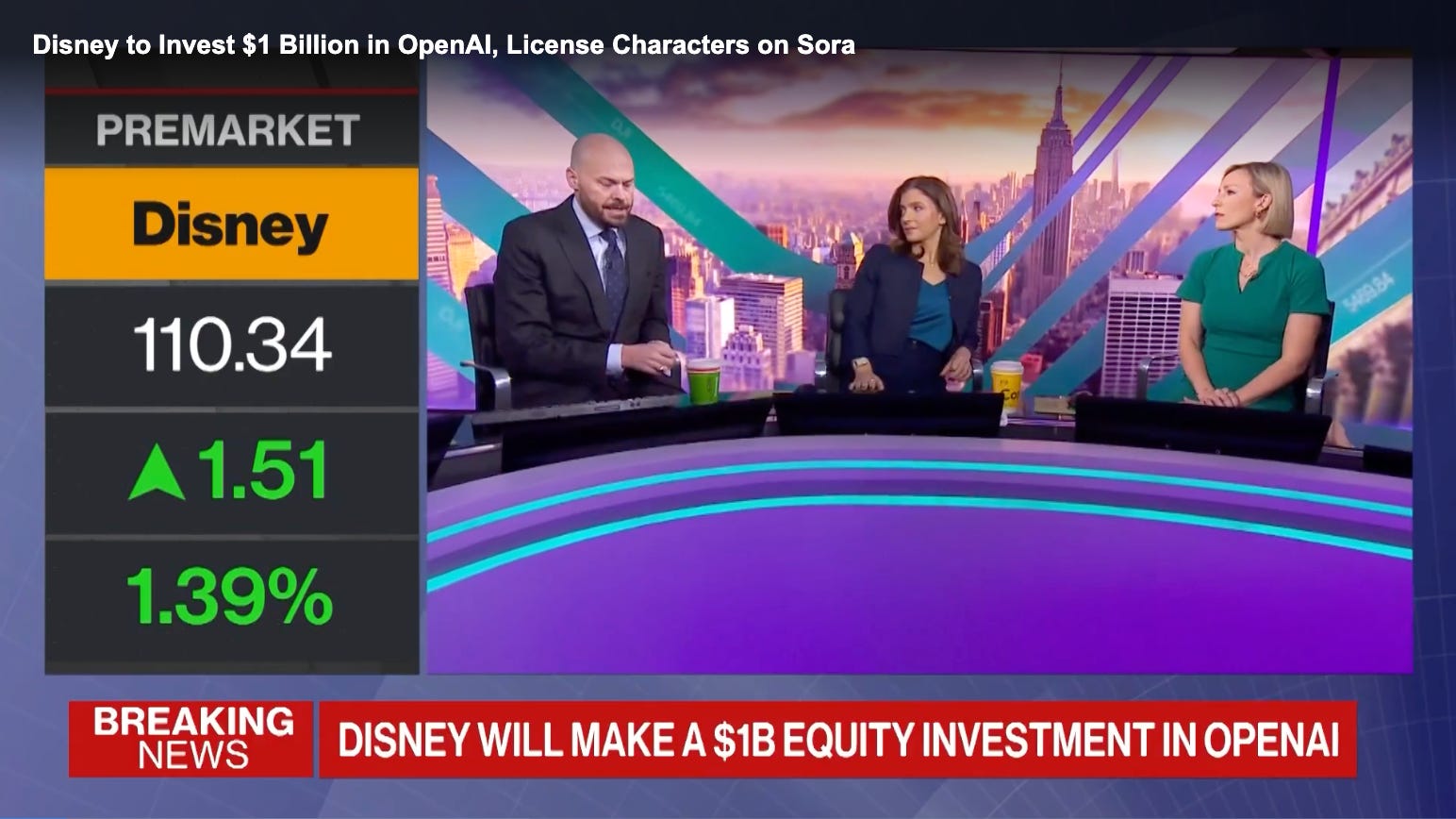
Disney investing $1 billion in OpenAI and licensing a curated slice of its character universe for AI-generated videos is definitely one of those moments.
If you work in social media or digital strategy, this is one of the rare instances where technology, culture, and intellectual property collide so directly that it immediately changes the broader landscape. Not because everything shifts overnight, but because a major entertainment studio just stepped into the AI world under terms it negotiated, controlled, and approved. That alone marks a turning point.
This piece is not about predicting the future or passing judgment on the move. For now, it is enough to understand what the deal is, why it matters, and how it will inevitably shape the content we all encounter on social platforms.
The social ecosystem is where these changes will surface first, long before courts or policymakers weigh in.
A New Chapter in AI Licensing
Disney’s agreement is narrow, structured, and designed to maintain tight control. OpenAI receives a three-year license to generate video using a defined collection of Disney, Pixar, Marvel, and Star Wars characters, along with certain settings and props. More than 200 characters are included, but the permissions are far from unlimited. Notably, the arrangement excludes all actor likenesses and voices, which keeps the deal clear of existing SAG-AFTRA and talent-rights concerns. OpenAI is also restricted from training its models on Disney content at this stage. In return, Disney becomes an investor in the company and a major enterprise customer.
Although the license is tightly scoped, its existence alone represents a significant shift. Until now, studios have mostly responded to AI-generated character content through DMCA takedowns, public statements, or silence. This is different. Disney has chosen to formally define how an AI company can use parts of its intellectual property. That signals to the rest of the industry that AI licensing is not only possible but likely inevitable.
Once a studio as protective as Disney takes this step, everyone else pays attention.
What This Means for Social Platforms
Social media is where the real action will unfold. Disney characters already have a massive presence on TikTok, Instagram, YouTube, and Pinterest through fan edits, cosplay transitions, soundtrack trends, animation tests, and mashups. Those creations live in a tolerated gray zone. With Sora-generated Disney clips entering the mix, the landscape becomes more complicated.
A Sora video featuring, for example, an AI-generated scene in a Pixar-like environment might appear similar to a fan edit at first glance. Yet the difference matters, both legally and culturally. For the first time, a platform will host content created through an AI tool that has an actual license to use these characters. The video will not be “official” Disney material, but it will not be unlicensed either. That creates an entirely new category of content that platforms will need to distinguish and handle correctly.
Moderation teams are going to face scenarios where they must determine whether a clip is licensed, unlicensed, malicious, or simply brand-unsafe. Social networks already struggle to manage deepfakes, misinformation, and copyright violations. Adding AI-generated content based on one of the most recognizable IP collections in the world raises the stakes.
Platforms will need new processes, clearer labeling systems, improved detection tools, and likely some form of metadata or watermarking that distinguishes which AI outputs were created through approved pathways.
This is not just a technical challenge. It is a cultural one, because audiences do not always differentiate between “official,” “licensed,” and “fan-made.” The consequence is that misinformation or brand confusion could spread quickly if moderation does not keep up. Facebook, for instance, will undoubtedly become a hotspot for out-of-context AI clips being shared as authentic Disney promotions. TikTok will find itself flooded with hyper-familiar imagery generated by users who are testing the boundaries of the tool, not unlike the early days of green screen memes. Instagram will see polished, high-production Sora creations showcased by influencers who understand how well nostalgic IP performs in the algorithm. YouTube will likely become the home for long-form experiments that remix or reinterpret these outputs, sparking inevitable debates about parody, criticism, and derivative works.
Across all of these platforms, the content itself will not be the only story. The surrounding discourse will be just as important. Every unusual or provocative AI output featuring a familiar character is going to generate commentary about copyright, ethics, artistry, and the future of entertainment.
The conversation will become part of the content.
Creators Gain Possibilities and Face New Limits
Creators are the group most likely to shape and stress-test this new environment. For them, the deal unlocks new possibilities, but it also tightens certain boundaries. Sora’s tools will enable the production of polished, character-driven visuals that previously required animation talent, software expertise, or a full post-production pipeline. With the ability to build scenes or narratives around beloved characters, creators can experiment with formats that would have been out of reach even five years ago.
However, freedom is not absolute. The license belongs to OpenAI, not the general public, and commercial use of anything involving Disney characters will remain prohibited. Even non-commercial use will carry constraints. Disney has always been deeply protective of its brand identity, so creators should expect strict guardrails within the model. Outputs that appear out of character, inappropriate, political, or brand unsafe will almost certainly be restricted or removed. And creators, as always, will need to be careful about how they present AI-generated content to avoid confusing audiences about its origin or endorsement.
The overall effect is a kind of conditional empowerment. Creators will have exciting new tools, but Disney will still maintain full ownership of the underlying IP, the acceptable context, and the ultimate authority to take down content that crosses a line.
What the Deal Doesn’t Mean
Because the headlines were dramatic, it is worth clarifying what this agreement does not usher in:
It does not grant the public the right to generate any Disney character using any AI model.
It does not give creators the ability to commercialize AI-generated Disney content.
It does not authorize OpenAI to train its models on Disney films or shows.
It does not signal a full embrace of AI by Disney or a willingness to loosen its grip on its intellectual properties.
And it does not necessarily foreshadow the arrival of AI-driven Disney films.
What it does represent is a controlled experiment. Disney will get to observe how AI-generated content behaves inside social ecosystems, how audiences respond to it, how creators try to manipulate it, and how platforms react when the inevitable edge cases appear. OpenAI, meanwhile, gains a high-profile test bed for character-based video generation within a legally safe environment. Neither side is committing to the long-term consequences yet. This is a learning phase.
A Three-Way Collision: IP, AI, and Social Media
The Disney–OpenAI partnership highlights a collision that has been building for years. Intellectual property owners want to protect their assets. AI companies want access to culturally resonant material. Social media thrives on remixing, reframing, and redistributing the most familiar content possible. When these forces converge, a new kind of digital reality emerges.
That reality challenges long-standing assumptions. Will audiences be able to tell the difference between official Disney clips and licensed AI creations? Will younger viewers care about that distinction? Will the availability of AI-generated content diminish demand for traditional animation, or will it simply create new entry points into existing stories and worlds? These questions will not be answered quickly.
Social media is where we will see the first signs of how this experiment evolves. The platforms are fast, chaotic, and deeply participatory. They reward novelty but also familiarity. Disney characters live at the crossroads of those dynamics, which is exactly why this deal will play out so publicly and so unpredictably in users’ feeds.
What Social Media Professionals Should Watch
For those working in social media or digital marketing, this moment is worth observing closely. The most immediate implication is that character-based AI content will likely increase across platforms.
Brands should not assume they have any new freedom to create content using Disney’s IP, but they should expect the environment around them to change.
Creators and audiences may begin using AI-generated character clips as part of trends or narratives, and this will influence how viewers engage with broader content formats.
Social teams should also pay attention to how platforms update their moderation policies in response to the new types of content that emerge. The workflows for reporting, labeling, or restricting AI-generated material could shift significantly. And as always, the audience’s media literacy will lag behind the technology, creating both risks and opportunities for brands that understand the context.
A Brief Call to Action
For now, the smartest move is simply to pay attention. This is a rare moment when a major entertainment company and a major AI developer have opened a controlled window into what the future of content might look like. It is not a revolution yet, and it may never become one. But it is an inflection point worth watching because the earliest and most meaningful signals will appear on social media long before they show up anywhere else.
Keep an eye on the feeds. They will tell the story better than the press releases do.